Tuesday, 4 December 2007
Monday, 3 December 2007
HANGZOU
It took us 2 hours from Shanghai. We had to take a very early train so we were pretty tired all throughout the day. I guess after so many days traveling our energies and excitement had slowed down.
We stayed in a lovely hotel outlo
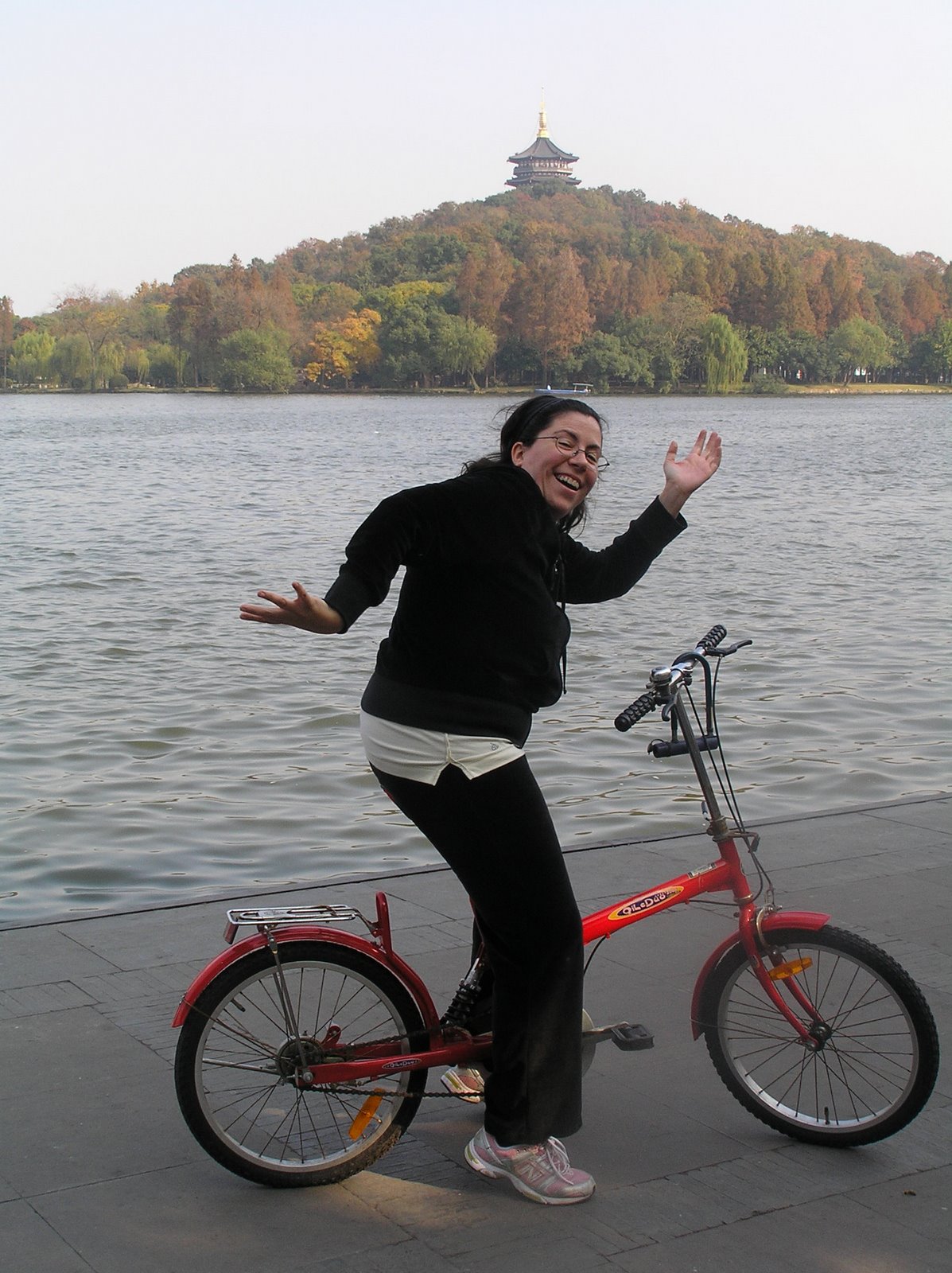
The day after we hired some bikes to cycle through the West lake which is huge and almost impossible to walk in 1day which was all the time we had for it.
We ended up posing like chinese do....well, sort of!!! Chinese women LOVE posing!!!!!! We had a laugh
Saturday, 1 December 2007
PINGYAO TO XIAN, Travelling in style part 2
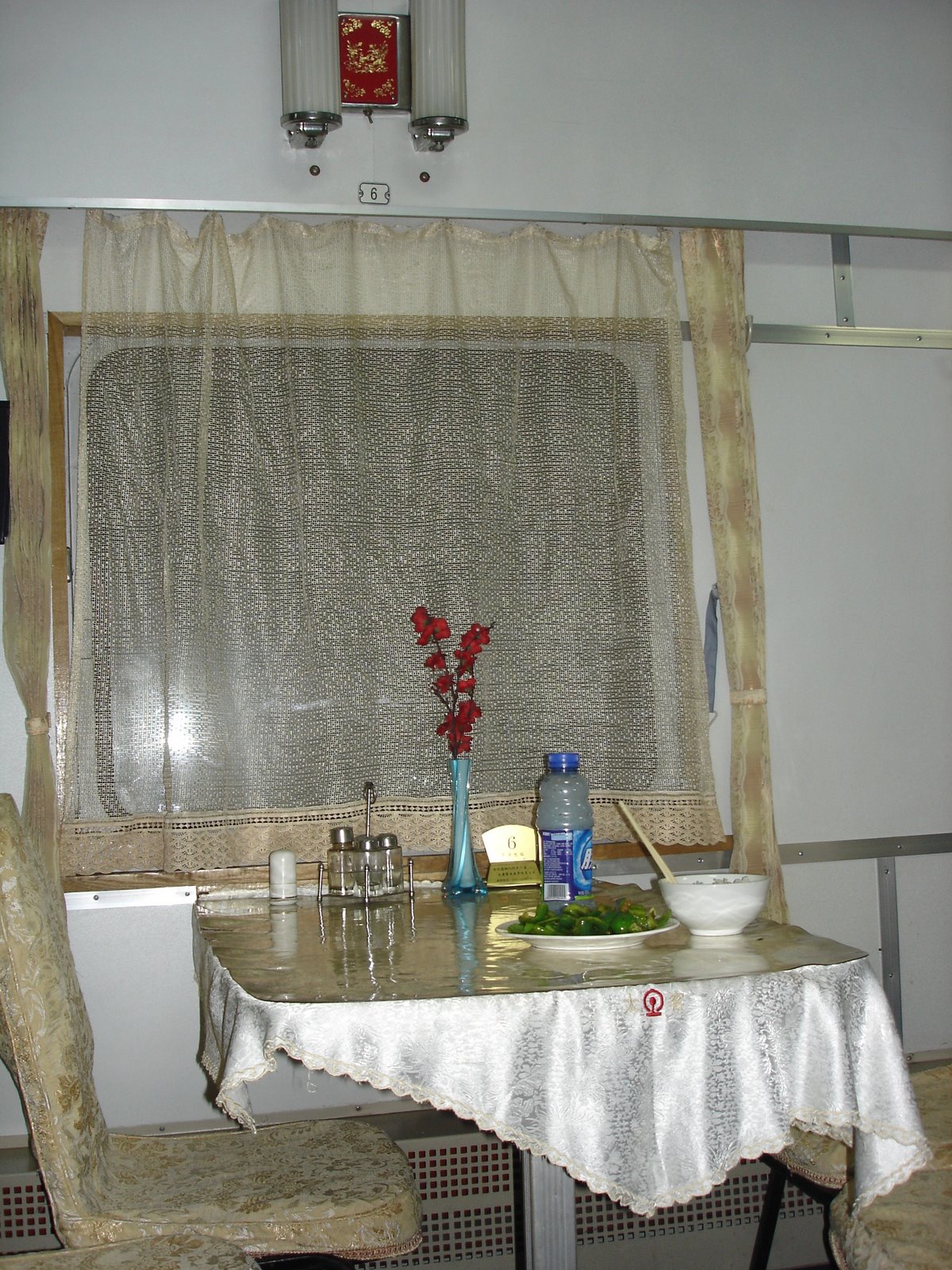
As we had enjoyed the luxurious trip the night before, we decided to try again this time on our way to Xian, 12 hours again on a train that reminded us of a World War 2 Film.
PINGYAO, 15th Nov 07, Travelling in style part 1
Pingyao it is quite a hot tourist attraction even though it is no longer economically prosperous. It boasts the famous Pingyao Old City which was included in the United Nations World Cultural Heritage in 1997. From the top of the grand City Wall, you have a bird's-eye view of the Old City, a complete city built almost a thousand years ago. In the Ancient Ming and Qing Street, you can experience the town's former glory while exploring the rows of residences and shops all constructed in the original architectural style. In the central area of Shanxi Province lies an ancient county typical of rural counties in North China--simple and steeped in ancient tradition. What's different is that this county is linked firmly to a certain prosperous time in Chinese history. It played quite an important role in the economic development of Shanxi during the Ming and Qing Dynasties.
Pingyao was not endowed with charming natural scenery but with a group of accomplished businessmen. Pingyao was the birthplace of the Jin Businessmen, who were one of the two famous Chinese business groups during the Ming (1368-1644) and Qing (1644-1911) dynasties. Owing to this, the first Chinese exchange shop was opened in Pingyao. Then, for the next hundred years, Pingyao was home to almost all of the large exchange shops in China. To a certain degree, Pingyao was to China during the eighteenth century what Wall Street is to the US, which not only helped promote the economic development of Shanxi, but also left us with a magnificent old city and a series of grand residences.
Day 3, BEIJING, 13th Nov 2007
From there we walked in Tianmen Square and unfortunately we could not see Mao frozen as it was closed...from there we took and to get to the Temple of Heaven. Beijing is huge, 15million population so the distances are enormous.
LIJIANG 16th Nov 07
On December 3rd, 1997, the Old Town of Lijiang was put in the list of the World's Relics by the World Cultural Heritage Commission of the UNESCO (United Nations Educational, Scientific, and Cultural Organization). The charming Old Town is now a famous tourist attraction for its traditional ethnic culture and customs, inimitable buildings and the wonderful natural views.
The Old Town of Lijiang, a well-preserved old city of ethnic minorities with brilliant culture, is a central town of the Lijiang Autonomous County of the Naxi Ethnic Minority in Yunnan Province embraced by the tree-covered Lion Mountain in the west, Elephant and Golden Row Mountains in the north, vast fertile fields in the southeast and crystal clear water running through. The Old Town which occupies an area of three point eight square kilometers (912 acres) was firstly built in the late Song Dynasty and the early Yuan Dynasty and has a history of more than 800 years. The Lijiang Old Town is built along the lie of mountains and the flow of rivers, providing a very precious sample of the research on the old-time architecture. The unique geographical location, historical background and multiracial inhabitants make the town the most special one.
The Old Town is the only old city built without a city wall and there is an interesting story telling the reason. Lijiang had been under the reign of the hereditary Mu family for more than 500 years. If the Chinese character 'Mu' (represents the governor of Lijiang) is put into a frame (represents the city wall), you have the character 'Kun' which means 'siege' or 'predicament'. This would mean that the governing Mu family and their descendants would always be trapped like a rat in a hole. Because of this symbolism, Old Town Lijiang was never given a city wall.
As a result of the combination of the multinational culture and the progress of Naxi ethnic minority, the buildings in the town incorporate the best parts of the architectural traits of Han, Bai, and Tibet into a unique Naxi style. The layout of the town is free-style and flexible, the houses are close and diverse, and the lanes are narrow and meandering. Naxi people pay much attention to the decoration, the commodious and applied houses are mostly timber and tile structure compound with a garden, each has engraved vivid figures of people and animals on doors and windows, beautiful flowers and trees in the garden.Living in such a beautiful and comfortable environment is a real pleasant thing.
The old Town of Lijiang is a city depends on water for existence and water is just like its blood. Black Dragon Pool (Heilongtan) is the main water source of the town and subdivides into many streams which can reach every family and every street in the town. Due to the reticular aqueducts, willow trees grow everywhere and there are almost 350 varied and inimitable bridges in the little town, some of which were built in the Ming and Qing Dynasties. The usage of the water created by the local people is very scientific. They build three mouths every well from the upriver to the downriver. The water in the first mouth is for edibility, the second one is for cleaning of the vegetables and fruits, and the last one is used to wash the clothes. The water not only meets the need of the dweller, but also gives the town a beauty of gentle. The town reputed as the 'Oriental Venice' and 'Suzhou in Highland', but it is much, much more than this. Once you have visited Old Town Lijiang, it will capture your heart for the rest of your life.
Hong Kong in December
Last night , Friday night we went to the Mandarin Oriental with Jonathan and Fernando, Radama's great friends. We had a fab time. Champagne and canapes were delicious and after so many days without alcohol it made us feel good. From there we headed to the Armani Bar, Four Season's Blue Bar and ended in Isola Bar. Very cool indeed.
Tuesday, 27 November 2007
from paris, again
dear all, I’m back to
the rest of the chinucas are still in hong kong enjoying their last days in china
as you all know we couldn’t update our blog from china
it is not only the blog, chinese authorities block the access to many other pages, wikipedia and the like
to be completely accurate:
even if all postings since oct 16th appear with my name I didn't write any of them
the one on the 16th is from my brother (thanks c) I asked him to access the blog from
he also found a way around the blockage and we were able, from the 19th on, to post but only under my name.
all those postings are from carpioma (also know as maricarpi or 1001 photos)
Friday, 23 November 2007
SHANGHAI Day 1
Thursday, 22 November 2007
HI FROM SHANGHAI!!!
We were exhausted so this morning we are taking it easy. I'll tell you all about yesterday because it was a day to remember. The way these guys drive is the real adventure in this country. I thought we would never make it to the hotel from the airport...Radama and I shared the same nutter taxi driver and believe me when i tell you I thought I'd never see my mum again!
We are off to explore Shangai now. You are all sleeping in Europe so I'll have time later on to update you.
Carpioma with love from SHANGAI
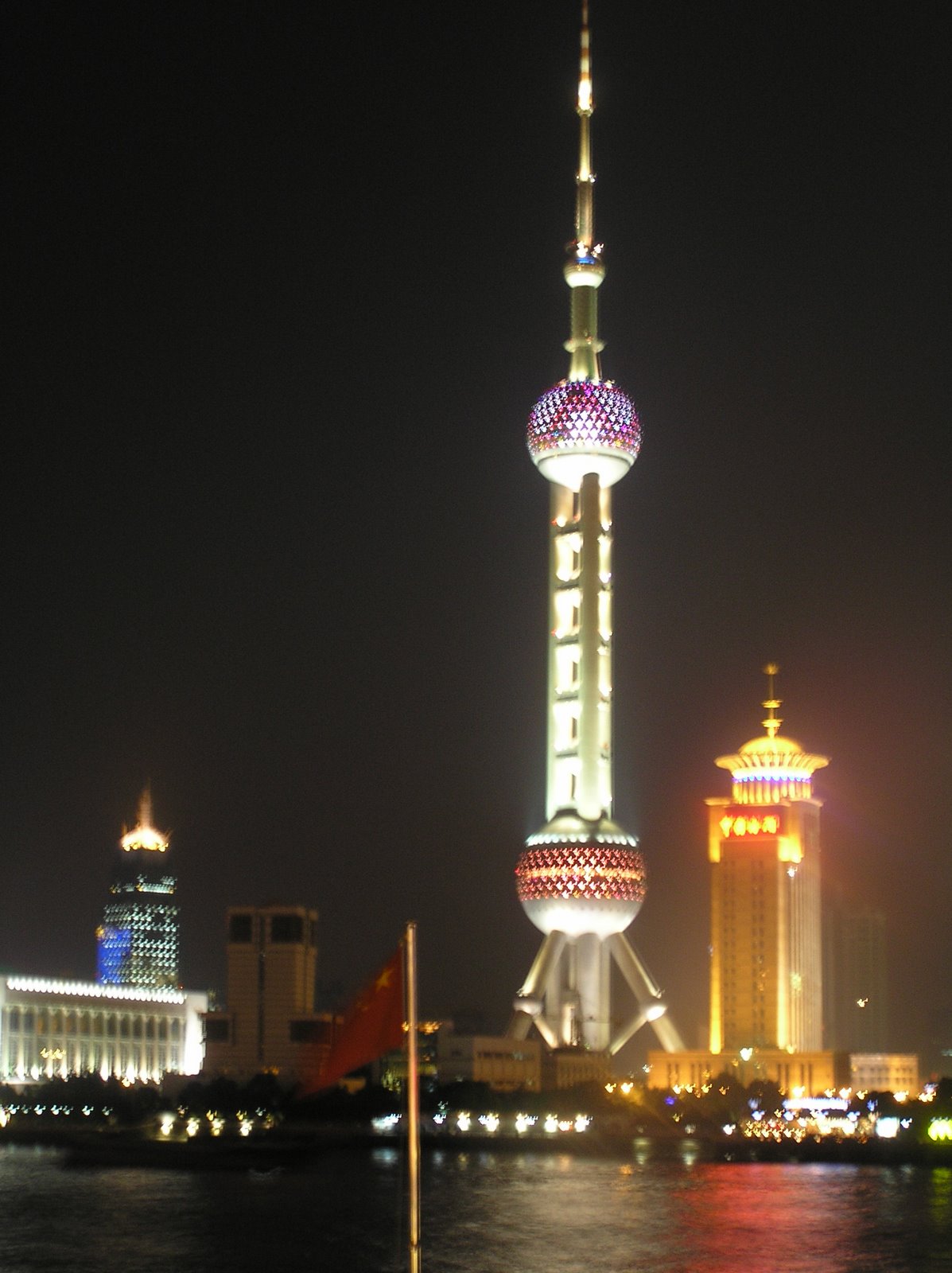
Hi again, we headed to Putong, the Shanghai's City and we went to the Jin Mao Tower, the highest one so far, 340metres (they are building a new one almost besides which will be the tallest) and the lift only takes 40 seconds to get to t
Once there and after posting a postcard Radama and I had a "chat" with the F
Tuesday, 20 November 2007
Hola desde YANGSHUO
Nos hemos cruzado con labradores en el campo, arando con bueyes, sacando agua del rio y transportandolas en uos cubos que se cuelgan de una vara de bambu y la cual se apoyan en los hombros...desde luego el bambu es un gran recurso en este gran pais, bebes jugando, gente con vacas, patos, y ladrillo, mucho ladrillo. Habia una pequena fabrica en medio de los arrozales. Estan construyendo bastante en la zona rural y segun parece las autridades locales estan demoliendo edificios para substituirlos por otros de aspecto sospechosamente moderno.
Monday, 19 November 2007
FROM YANGSHUO
Where is it? Yangshuo is a small county in southern China. In the 1980s, many foreign backpackers were drawn here by the introduction of the county in the 'Lonely Planet'.
Yangshuo lies in the northeast of Guangxi Province and to the southeast of Guilin City. The special geography gives it breath-taking beauty while over 1,400 years of history bless it with a deep traditional culture. The diverse ethnic minority groups including Hui, Zhuang, Yao and others, enrich it with special folk cultures represented by their various festivals; while many foreign residents add exotic flavors to its fascination.
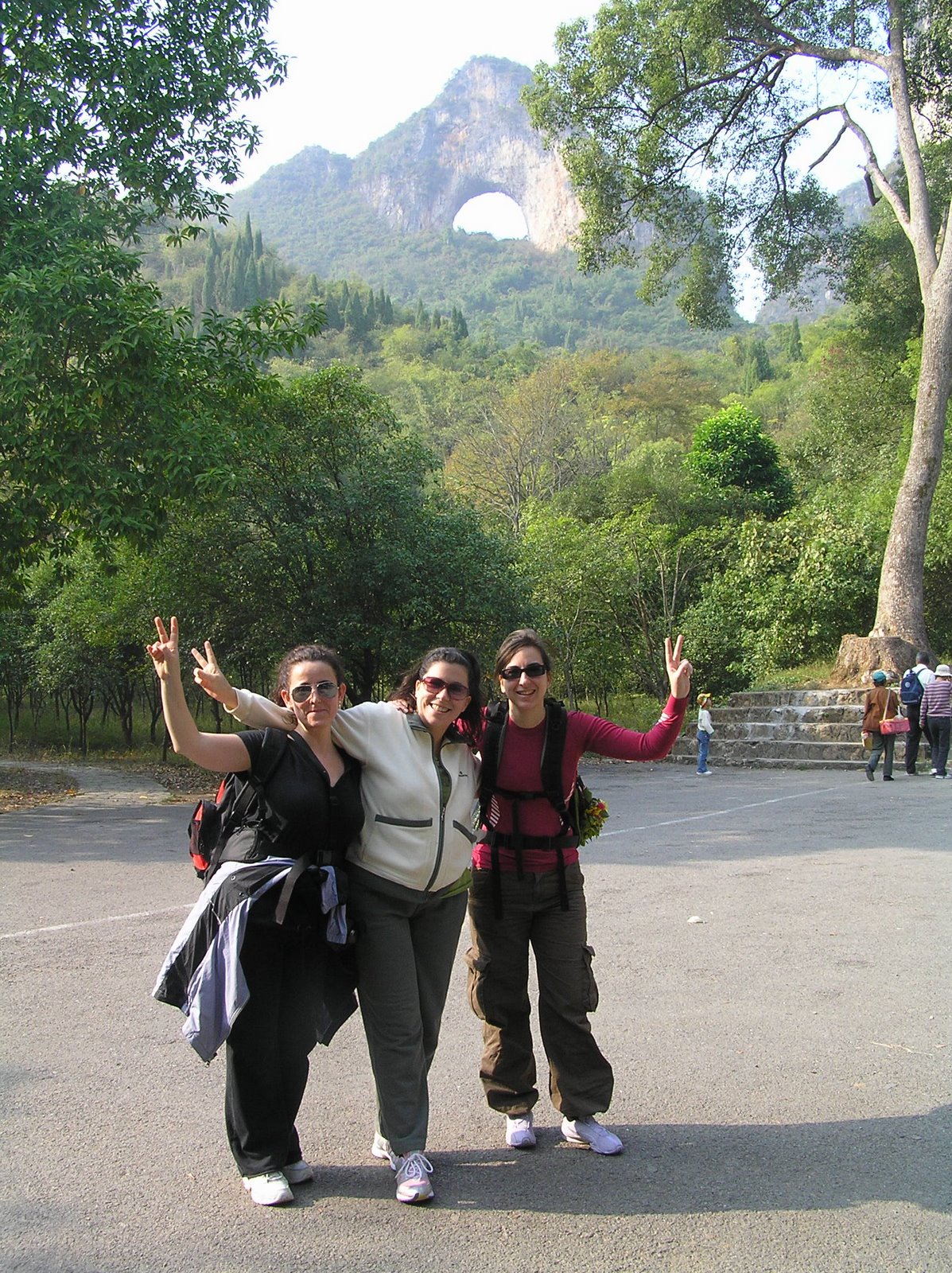
The famous Li River traverses the county and brings it the most beautiful scenery. Along the extremely pure river, thousands of hills stand in different poses and with different expressions, such as Moon Hill, Mural Hill and Schoolboy Hill which is the natural stage of the world famous opera 'Impression on Sanjie Liu'. Streets in Yangshuo are well kept in the original style, presenting the simple and primitive atmosphere of the ancient town. West Street is the most exciting one that locals call the 'Global Village'. There are not only many foreign tourists, but also quite a number of foreign residents managing cafés and restaurants. The exotic flavor, combined with the traditional culture, make the West Street world famous.
BEIJING DAY 2- 13th November CHINESE WALL-MUTIANYU
Our trip to the Chinese Wall, Mutianyu section, took 2 hours drive from Beijing.
We hired a local guy that took us for 40 Euro return 4 of us. We left at 8am very excited about the idea of walking on the Great Wall of China.
We chose Mutianyu, the second less touristic side 80km from Beijing and one of the toughest ones.
We were really lucky as I don't think we saw more than 20 people in total so we had the great pleasure to enjoy it to the full . Located in Huairou County about 45 miles from Beijing, Mutianyu Great Wall enjoys a long history and is part of the glorious culture of China. It connects Juyongguan Pass in the west and Gubeikou Great Wall in the east. The wall was first built in Northern Qi Dynasty (550 - 557). In Ming Dynasty (1368 - 1644), Tan Lun and Qi Jiguang, two famous patriotic generals, rebuilt it in order to strengthen its defensive potential when they guarded the strategic pass. It served as the northern protective screen, guarding the capital and imperial mausoleums for generations.
Mutianyu Great Wall winds 1.4 miles through lofty mountains and high ridges, many sections of which are made of granite. The unique structure makes the wall almost indestructible. It measures 23 to 26 feet high and four to five yards wide. Both of the wall's inner and outer sides have parapets to defend against enemies coming from the two sides. Some parapets are saw- tooth shaped instead of the regular rectangular form. Below the parapets, there are square embrasures the top of which are designed in an arc structure, different from the traditional round embrasures. Besides its strategically important location and compact layout, the Mutianyu Great Wall is also famous for the breath-takingly beautiful scenery. Woods cover over ninety-six percent of the total scenic area. The wall presents different aspects of beauty in the four seasons. Flowers bloom all over the mountains in spring. Grasses dress the hillside green in summer. Trees are laden with sweet fruits in autumn, and especially in October, leaves are turning red or yellow, touching the mountain tops with gold. In winter, the wall is covered by snow, making it seem more magnificent. The pine trees around Mutianyu Great Wall are well-known. There are more than 20 pines over 300 years old and about 200 pines over 100 year old. Besides, spring water at the foot of the wall tastes pure and fragrant, much appreciated by visitors.
In the evening and back in Beijing 3 of us decided to go to the opera in the HUGUANG one.BEJING DAY 1- 12th November
BEIJING- Chinucas' first meeting- 11th November 2007
CHINA, EL PAIS DEL AJO, EL CODAZO Y EL ESCUPITAJO!!
ACCESS TO THE BLOG FROM KUNMIG AIRPORT- Monday 19th November
Friday, 16 November 2007
CHINA'S CENSORSHIP
Sunday, 11 November 2007
Hong Kong to BEIJING
We are finishing packing getting ready to travel around China during 18 days.
We landed in Beijing and we met Cass for the first day of the trip together.
We headed to the hotel in a minibus that we rented and after struggling with the driver to communicate we arrived safely in our hotel, in the Hutons area of Beijing.
The Chinucas at the entrance of the Forbidden City with Mao on the background